
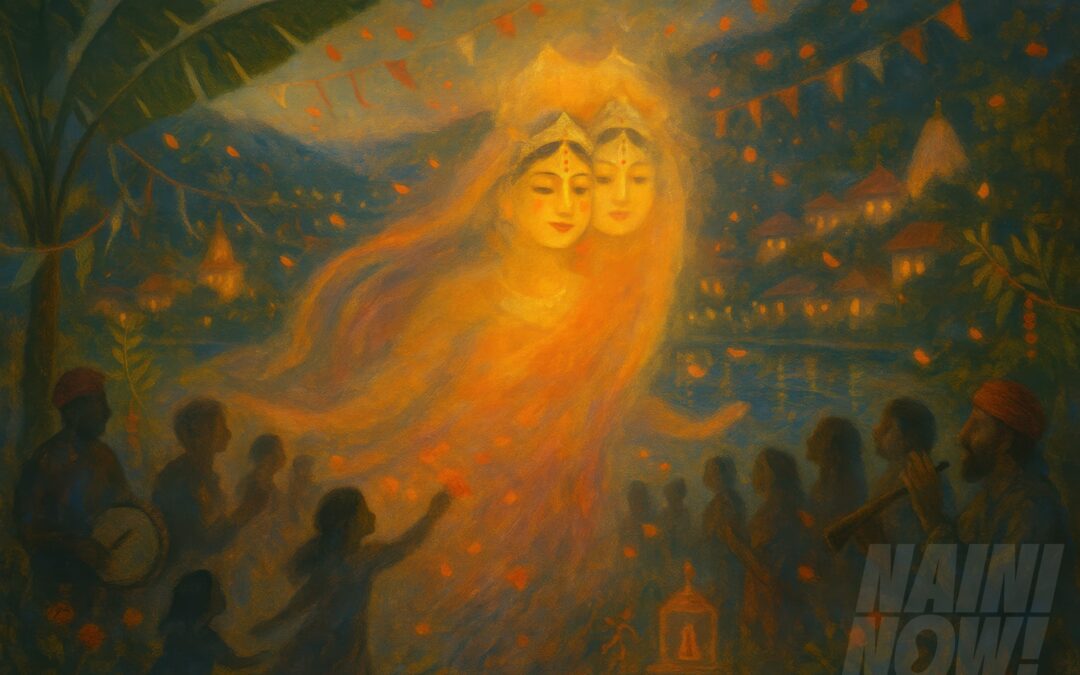
When the Goddess Moves Through Us
It begins with a whisper from the divine.
Five days before the festival, elders gather in the forest and tie red and white threads to banana plants. A handful of sacred rice is tossed, and we wait. The first leaf to flutter is chosen. That tree, touched first by divine breath, becomes the source of the Goddess.
Four banana plants are selected this way. Marked. Honoured. And then, carefully cut and carried with music and reverence to the temple, where skilled hands carve the idols of Nanda Devi and Sunanda Devi. Their faces, bold and golden, their eyes lined with kohl, their cheeks adorned with vermilion come to life beneath layers of Pahadi cloth and marigold garlands. From here, the festival begins
For nine days, Nainital pulses with movement.
The town transforms. Music swells in the streets, folk songs and drums, laughter and bells. A fair rises, and the narrow lanes bloom with light and colour. Villagers and artisans arrive from nearby hills, bringing handwoven shawls, painted wooden toys, and trinkets blessed with intention. Stalls overflow with sweet jalebis, roasted nuts, and brass utensils. The scent of incense hangs in the air, winding between lanterns and prayer flags.
Children from schools recite poems and perform dances in reverence. College students act out folk tales passed down through generations. It’s not a show, it’s a sharing. Of tradition. Of devotion. Of joy.
Each day, the temple welcomes wave after wave of worshippers. They come to lay eyes on the Goddesses. Some whisper prayers; others simply stand, silent, in awe. Elders bow low. Young girls offer flowers. The air is thick with reverence, quiet, but not still. The Goddess is present. Her presence moves through the people.
And then, on the ninth day, she moves through the town.
The dola—the palanquin rises, carried on the shoulders of men in maroon headscarves, arms linked tightly. The idols sway gently above the crowd, radiant and regal. The procession weaves through every lane and neighbourhood, stopping at doorsteps, shops, and street corners, bringing blessings to those too old or too sick to make the climb to the temple. No one is left behind.
The Goddess goes to them.
People press their hands together, eyes filled with tears. Petals rain from balconies. Folk singers walk alongside, reciting songs older than the streets they walk on. There is movement everywhere, not chaos, but choreography. The kind passed down in footsteps, in rhythm, in blood.
As evening falls, the procession reaches the lake. The same lake that reflects our mountains, our myths, and our grief. There, in a final act of return, the Goddesses are gently lowered into the water.
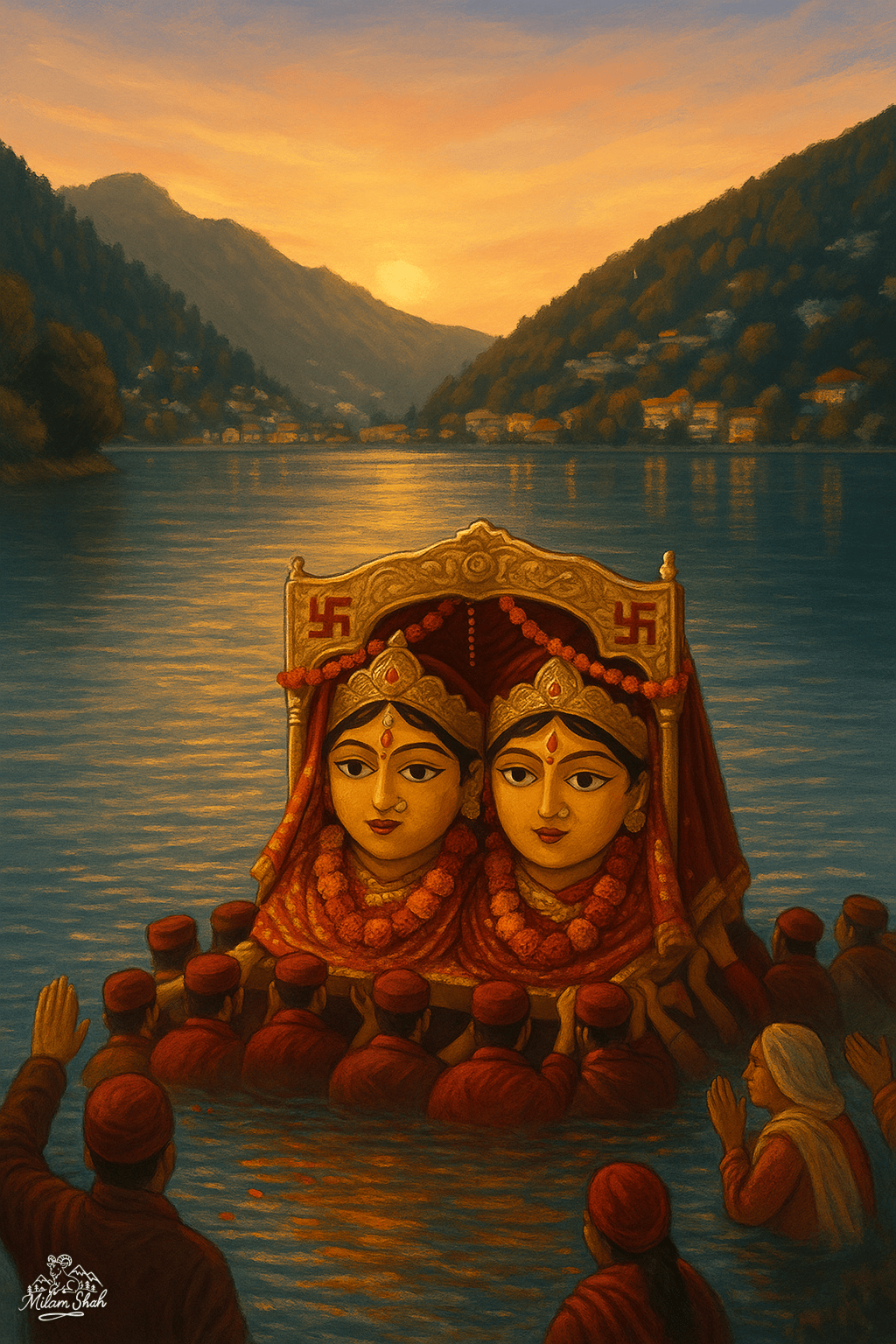
It is a farewell, but never a leaving.
For a moment, the crowd is still. Not silent, but still. Bells ring. Heads bow. The water ripples outward.
Later, as the lights dim and the streets empty, there’s a hum left in the air. The kind that only exists after something sacred has passed through.
And just like that, the Goddess who moved through us all—
returns to the hills.

Milam Shah
Author
Growing up in Nainital gave me more than just beautiful memories. It gave me a deep-rooted love for mountains, for stories passed down through generations, and for art that’s born from place and purpose.
Thank you, Milam, for this beautifully written and deeply evocative piece. Your words carry the spirit of the festival with such tenderness and grace — capturing not just the rituals, but the reverence, rhythm, and quiet power of devotion that moves through Nainital each year. It’s a truly moving tribute.