
Introduction
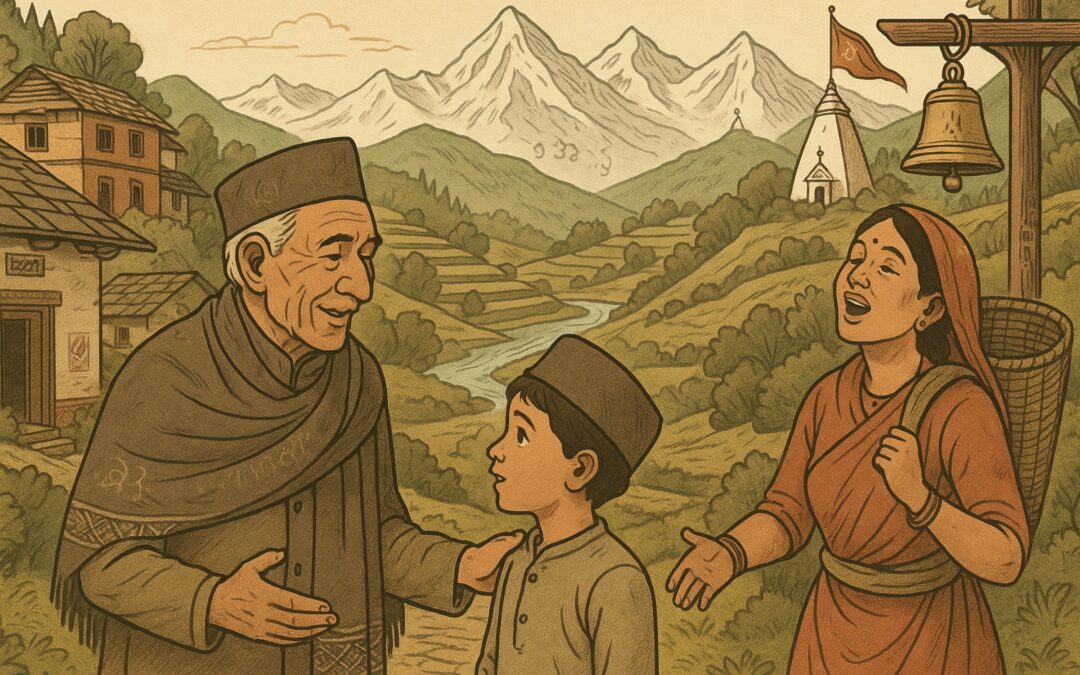
Kumaoni (कुमाऊँनी) is an Indo-Aryan language spoken by over two million people, primarily in the Kumaon region of Uttarakhand, India, and parts of western Nepal [1][2][3]. Renowned for its rich oral and literary heritage, Kumaoni serves as a vessel of cultural identity, traditions, and folklore for the people of Kumaon. Despite its vibrant legacy, the language faces challenges in the modern era. UNESCO has classified it as “unsafe,” highlighting the need for active preservation efforts [1][3][4].
Geographic Distribution and Dialects
Kumaoni is predominantly spoken in the six districts of Kumaon: Almora, Nainital, Pithoragarh, Bageshwar, Champawat, and Udham Singh Nagar [2]. It also has a presence in parts of western Nepal and some regions of Himachal Pradesh [1][5].
The language includes a variety of regional dialects, each reflecting the unique identity of its speakers. Major dialects include:
- Johari (Johar Valley)
- Askoti (Askot)
- Bhabhri (Haldwani, Ramnagar)
- Danpuriya (Danpur)
- Gangoli (Ganai-Gangoli)
- Khasparjiya (Almora)
- Kumaiyya (Champawat)
- Pachhai (Pali-Pachhhau)
- Phaldakotiya (Phaldkot)
- Rhau-Chaubyansi (Nainital)
- Sirali (Sirakot)
- Soriyali (Sor Valley) [1][5][3]
These dialects are mutually intelligible and often grouped into four broad categories: Eastern, Western, Northern, and Southern Kumaoni [4].
Historical Origins
Early History
The Kumaon region, along with Garhwal, historically formed a single politico-cultural unit known as the Central Pahari region [6]. The earliest evidence of the Kumaoni language can be traced to the Katyuri and Chand dynasties. Inscriptions from these periods have been found on temple stones and copper plates [1]. Kumaoni was also the official language of the Kumaon Kingdom during these times [1].
Linguistic Roots
Kumaoni is part of the Indo-Aryan branch of the Indo-European language family. It falls under the Central Pahari group and is closely related to Garhwali and Nepali [1][7][5]. Several theories explain its origin:
- Suraseni Prakrit Hypothesis: According to some scholars, Kumaoni evolved from Suraseni Prakrit, which also influenced Rajasthani and Braj Bhasha. The language has incorporated vocabulary from various settlers over time [6].
- Khasas and Dardic Influence: The region’s early inhabitants, the Khasas, contributed to the grammatical structure and phonetics of Kumaoni. There may also be traces of Dardic influence [1][6].
- Sanskrit Influence: While Kumaoni borrows heavily from Sanskrit vocabulary, its grammar shows a distinct evolution compared to Hindi [5][4].
External Influences
The language has absorbed elements from Nepali, Tibeto-Burman languages, and dialects of Himachal Pradesh. This reflects the region’s history of migration and cultural interactions [5][4].
Linguistic Characteristics
Script
Kumaoni is written using the Devanagari script, similar to Hindi and other North Indian languages [1].
Phonology
Kumaoni has a rich phonological system, featuring a wide range of consonant and vowel sounds. Some of these are influenced by neighboring languages and ancient linguistic roots [1].
Grammar
Kumaoni grammar shares traits with other Central Pahari languages but also exhibits distinct characteristics. For instance, the verb substantive derives from the root ach, a feature it shares with Rajasthani and Kashmiri but not with Hindi [1]. The language also retains features from the old Khasa language, such as vowel shortening and the insertion of additional sounds (epenthesis) [1].
Vocabulary
The vocabulary is largely derived from Sanskrit, though it includes significant contributions from Prakrit, Nepali, and Tibeto-Burman languages. This mix reflects centuries of cultural exchange [5][4].
Cultural and Literary Heritage
Kumaoni is deeply woven into the region’s folklore, oral traditions, and literature. Some key elements include:
- Folk Songs and Ballads: Songs like “Bedu Pako Bara Massa” are internationally recognized and symbolize Kumaoni identity [3].
- Mythological Narratives: Tales such as “Rajula Malushahi” and the Jaagar ritual songs are central to Kumaoni oral literature [3].
- Literary Figures: Authors like Lok Ratna Pant (Gumani), Kunwar Singh Bhandari, and Jeevan Chandra Joshi have played vital roles in preserving and enriching the language [3].
Modern Status and Preservation Efforts
Despite its cultural richness, Kumaoni faces significant threats:
- Endangerment: UNESCO has categorized Kumaoni as “unsafe,” meaning it is at risk without targeted efforts to preserve it [1][3][4].
- Migration and Modernization: The shift toward urban living and the growing use of Hindi and English have contributed to a decline in native Kumaoni speakers, especially among the younger generation [4].
- Preservation Initiatives: Programs aimed at revitalizing the language include promoting it in schools, media, and cultural events. There is also an increasing emphasis on instilling pride in linguistic heritage among the youth [2][4].
Conclusion
Kumaoni is a living symbol of the Himalayas’ historical and cultural diversity. From ancient inscriptions to contemporary struggles for survival, its journey reflects the resilience of its speakers. Sustaining the Kumaoni language will depend on collective community efforts and institutional support to preserve its unique legacy.
References
- Wikipedia – Kumaoni language
- KMVN – Language
- Rawat, B. (2022), “Study of Kumaoni Language for Natural Language Processing”
- Uttarakhand Trip – Kumaoni Regional Language
- Saumyasworld Kumaon – History & Language
- IJR Journal – Endangered Kumaoni Language and Its Upliftment
- SVG Academy Journal – Cultural Practices and Challenges of the Kumaon Division
All factual statements in this article are directly supported by the above sources. Where multiple perspectives or hypotheses exist, these are clearly indicated and referenced accordingly.