
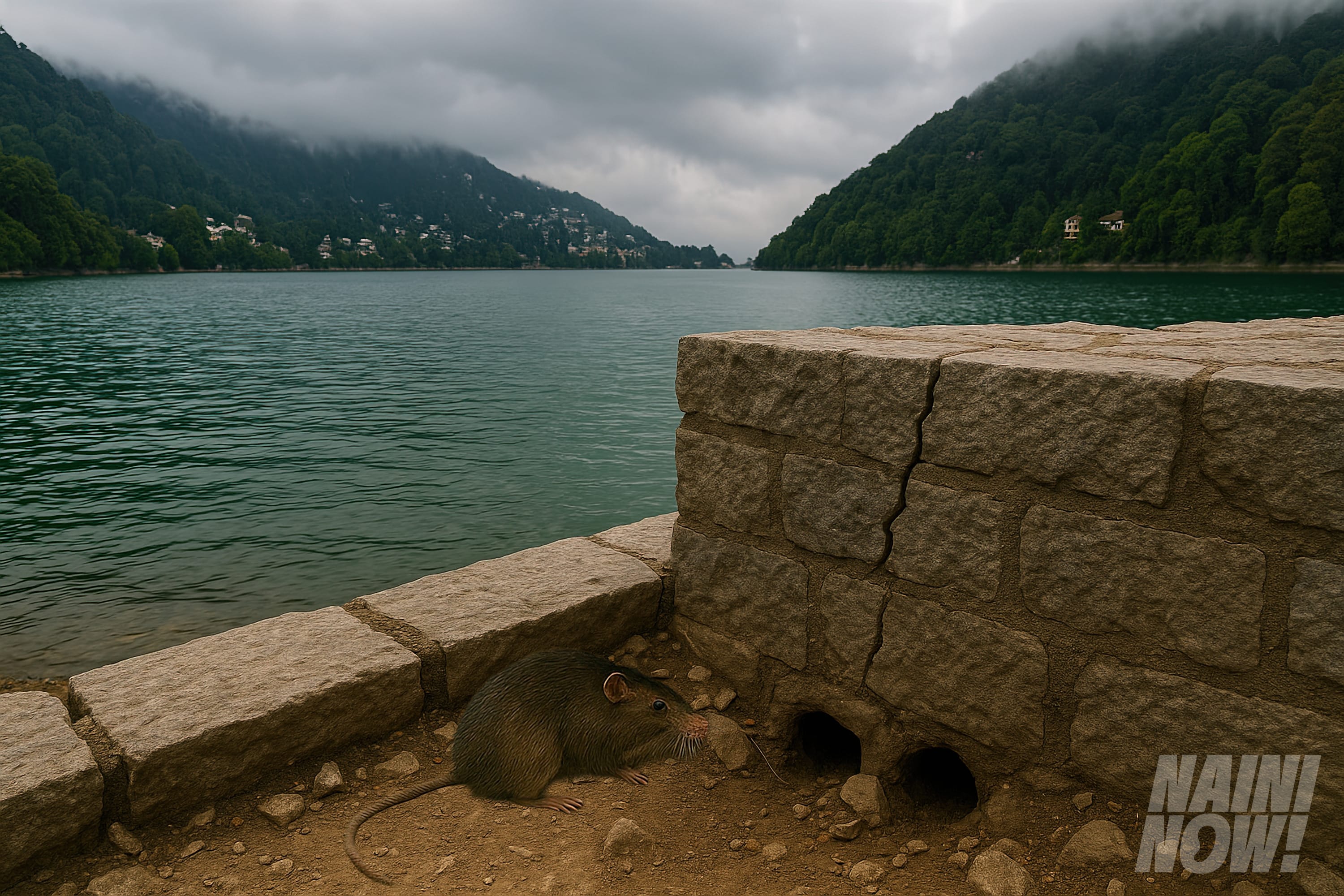
NAINITAL’S postcard-perfect lakefront hides a growing danger—not from tectonic shifts or torrential rains alone, but from a far smaller and stealthier source: Rats and Mice! Recent reports confirm that rodent burrows are weakening the retaining walls along Naini Lake, threatening the fragile geology of this Himalayan town and heightening its already critical landslide risk.
Cracks along the lake’s iconic boundaries, once admired for their symmetry and strength, now reveal hollowed embankments, subsidence, and signs of slow failure. From Pant Park to Boat House Club, and along bustling Mall Road, locals have begun sounding the alarm: Are rodents quietly undermining Nainital’s very foundation?

A Lake Under Siege
Firsthand Observations from Residents
In early 2025, several residents of Nainital began raising concerns about burrowing rodents around the lake’s banks. In interviews published by The Times of India, locals described visible holes near footpaths, cracks in retaining walls, and a noticeable rise in rodent sightings near their homes and businesses.
Ms. Kala Joshi, a retired school principal and resident of Tallital, shared her concern:
“The road next to my house has been completely dug up by mice. The retaining wall could collapse anytime.” [1]
Mr. Kailash, a garment shop owner, noted the deepening infrastructure damage:
“There are cracks in walls, gnawed electrical wiring, and now even roads are being affected. The damage is worsening.” [1]
Government Acknowledgement
In February 2025, the Uttarakhand Irrigation Department acknowledged the issue, stating that rodent burrowing was contributing to the weakening of retaining structures around Naini Lake. A preliminary assessment was conducted in coordination with the Forest Department, which suggested that if left unchecked, the burrows could accelerate soil loosening and eventually trigger localised collapses [1].

Why Rodent Burrowing Matters in Nainital
Structural Impact
Rodents like rats and mice are instinctive burrowers. When they dig into embankments or walls, they create voids that reduce soil compactness. These voids allow water to infiltrate more deeply and unpredictably, which increases erosion and the risk of infrastructure subsidence.
This is especially dangerous in a town like Nainital, where many retaining walls are already aging or built on unstable slopes.
Geological Fragility
Nainital is situated in Seismic Zone V, the highest category of earthquake risk in India. The lake is bordered by slate and dolomite formations known to be weak and prone to landslides. The town has a long history of slope instability—most tragically highlighted by the 1880 landslide that killed over 150 people. More recently, landslides in Baliyanala in 2018 and 2021 displaced families and caused structural damage [2][3].
When rodents burrow into the slopes and walls that prevent such collapses, they become an unintentional—but real—geohazard.

What’s Causing the Rodent Surge?
Experts believe a combination of environmental change and poor urban waste management is driving the surge in rodent activity.
Botany professor Lalit Tewari explained that:
“Rodents seek warmer spaces when their natural habitats become unlivable. Climate change and urban development may be forcing them into human settlements.” [1]
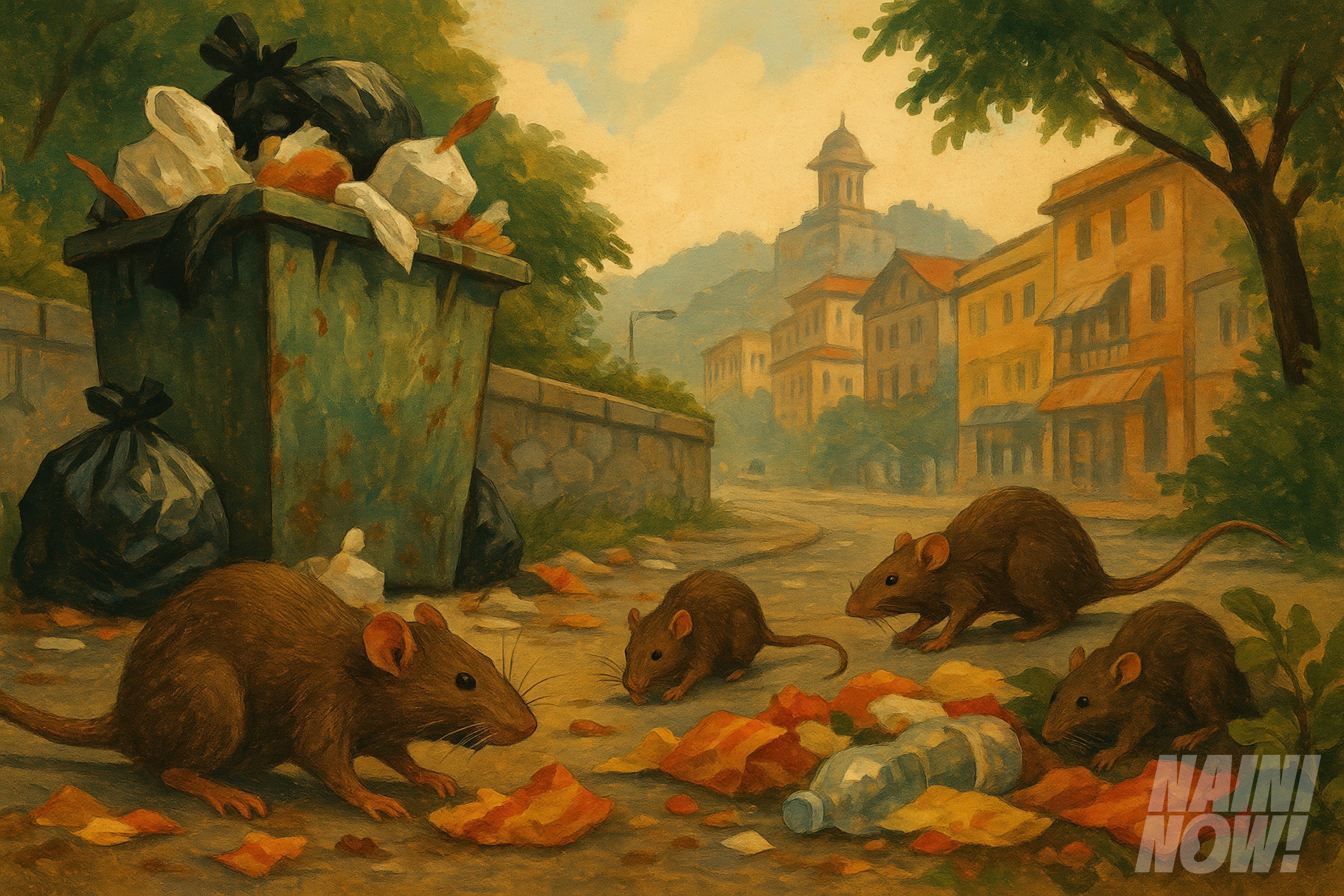
The growth in tourism, combined with littering along Mall Road and lakeside areas, has also created easy food sources for rodents. Overflowing garbage bins, leftover food, and encroachments on green cover all contribute to a booming rodent population with few natural predators left in urbanized zones.
Rodents in Residential and Commercial Zones
The rodent menace is not limited to the lake’s edges. Entire neighborhoods across Mallital, Tallital, and Ayarpatta are witnessing increased rat and mice infestations in homes, shops, and hotels.
In residential areas, locals have reported:
-
Burrows in gardens and under driveways
-
Gnawed wiring, especially in older homes, increasing the risk of electrical fires
-
Contaminated food supplies in kitchens and storage areas
-
Damage to wooden furniture, upholstery, and doors
In commercial spaces, particularly in local markets and older buildings:
-
Retailers report merchandise damage, especially to cloth, paper, and food items
-
Hotels and guesthouses struggle with hygiene issues, facing concerns from tourists
-
Food vendors are especially vulnerable, with rodents attracted to leftover scraps and improper waste disposal
The infestation is also driving up the cost of maintenance for many businesses and homeowners who are now spending on traps, repairs, and preventive treatments. Despite these efforts, the absence of a coordinated municipal response has made the problem difficult to contain.
What’s (Not) Being Done
Despite acknowledgment from officials, no significant civic intervention has taken place as of June 2025. While some reports suggest pest control discussions were initiated earlier in the year, there is no confirmed ongoing rodent control program, nor have structural reinforcements begun in the affected zones.
There are no publicized tenders, civic advisories, or cleanup drives focused on this issue. Neither the Nagar Palika nor the Lake Development Authority has released a formal action plan.
Potential Impacts If Left Unchecked
-
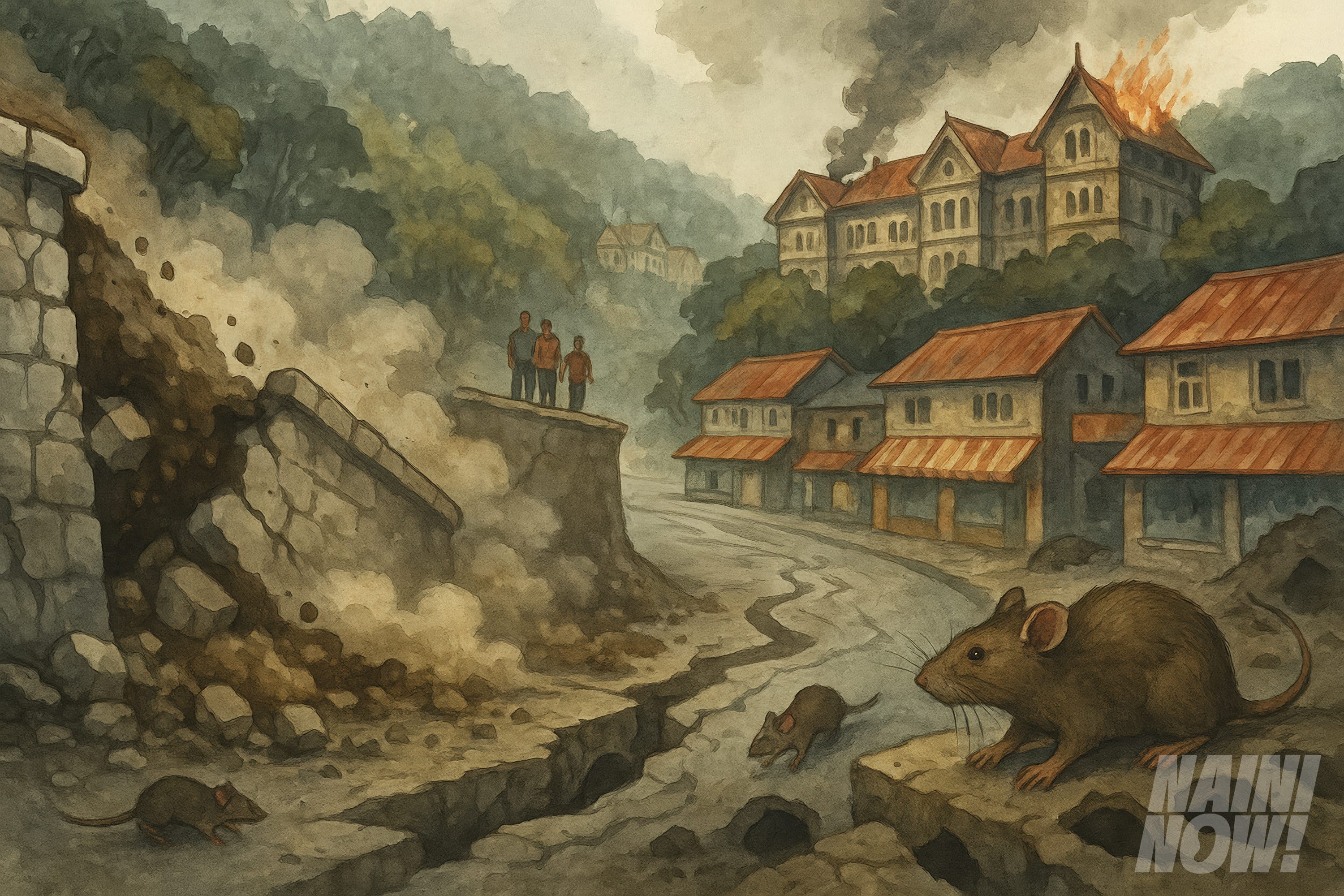
Collapse of Retaining Walls: Crumbling sections could pose risks to pedestrians, vehicles, and lakeside shops.
-
Landslides and Soil Subsidence: Rat-created tunnels create underground weaknesses, which can become slope failure zones, especially during monsoons.
-
Tourism Disruption: Infrastructure damage and safety concerns could further impact the already fragile local economy.
-
Public Health: Increased rodent populations carry the risk of disease transmission, from leptospirosis to flea-borne illnesses.
-
Urban Infrastructure Stress: Electrical failures, blocked drainage, and contaminated water lines are all real risks posed by a growing rodent population.
A Call to Action
The rodent problem at Naini Lake is no longer a minor nuisance—it’s a compounding factor in a larger environmental risk scenario. Unless addressed proactively, it could lead to further structural collapses and natural disasters in one of India’s most iconic hill towns.
Experts recommend the following:
-
Immediate deployment of non-lethal rodent control around critical embankments.
-
Use of geo-bags and cement grouting to plug vulnerable areas.
-
Stronger regulation and daily waste management, especially near the lake.
-
Transparent, public communication and monitoring by civic bodies.
Conclusion
The crisis around Naini Lake highlights how a small oversight—like ignoring rodent activity—can have major consequences in a fragile ecosystem. Nainital’s future depends not just on grand infrastructure projects, but also on granular, persistent attention to the subtle signs of decay.
The lake’s beauty may still draw crowds, but its banks—and neighbourhoods—are telling a different story: one of erosion, infestation, and civic inaction.
References
- The Times of India, February 5, 2025 – “Lake city under siege from rodents”
- News18 Hindi, June 17, 2025 – “नैनीताल की झील के किनारे चूहों की सुरंगें बन रहीं बड़ी समस्या”
- National Institute of Disaster Management – “Landslide Hazard Zonation in Nainital”
- Geological Survey of India – “Geological Report on the Nainital Lake Region”
- State Disaster Management Authority, Uttarakhand – “Hazard Profile of Nainital District”









Right nd honest approach. Well.pl.carry on ur positive approach 👌👌👍👍
Thank you Uncle for your kind words of encouragement. This will only be fruitful with the help & support our elder citizens such as you 🙏