
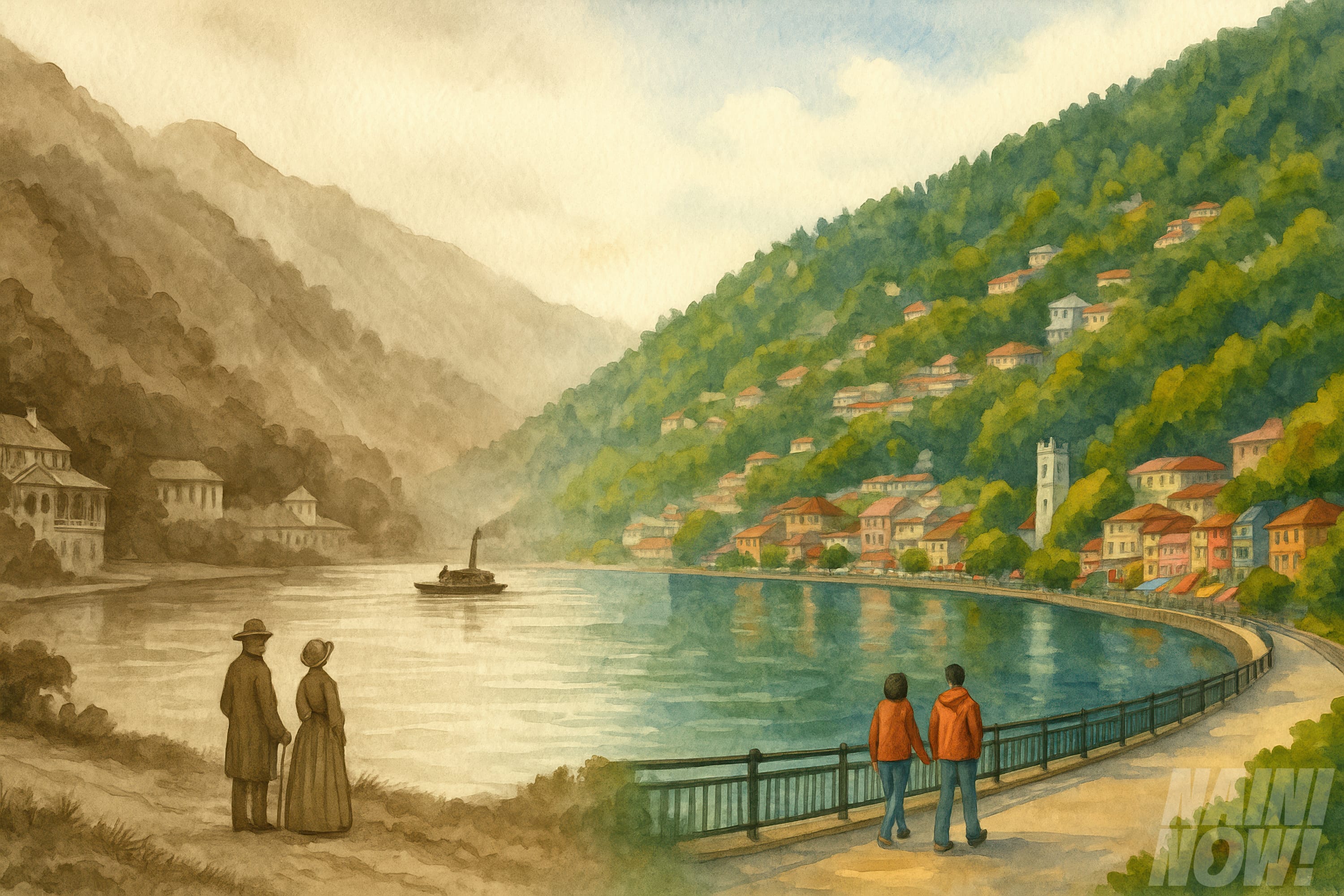
From a quiet colonial-era hill station to a bustling town facing the pressures of tourism and urbanisation, Nainital’s story is also a story of people, those who settled here, those who built lives, and those who keep arriving to experience its charm.
This graph traces how our town’s population has grown from the late 19th century to the present. It brings together official census records, historical estimates, and recent projections, offering a long view of how Nainital has changed.
📊 Explore the Data
👉 Tap on the interactive chart above to see how our town has evolved decade by decade.
🕰️ A Walk Through Time
-
1880s: Nainital was already attracting seasonal tourists. Early counts vary wildly in 1880, the town had over 10,000 people during peak season, but dropped to around 6,500 in the off-season.
-
1901–1951: The population hovered below 15,000 for decades. The town remained relatively small, serving as a summer retreat and administrative hub.
-
Post-1950s: With India’s independence and the state’s growing significance, the population began to rise more steadily.
-
1971–2001: A noticeable urban shift; schools, state offices, and year-round settlements contributed to the town’s growth. By 2001, we had crossed 38,000 residents.
-
2011–2025 (est.): The trend continues. The 2011 census recorded 41,377, and current estimates suggest we are nearing 57,000 residents in 2025.
🔍 What This Growth Tells Us
Population data is more than numbers; it reflects deeper patterns:
-
Infrastructure pressure: As more people settle here (residents and floating populations), demand on water, waste, roads, and public services increases.
-
Changing land use: Old homes give way to hotels. Forest edges retreat. Open spaces vanish.
-
New challenges, new opportunities: This data is vital for town planning, resource management, and citizen-led interventions.
📉 Why There’s No 2021 Census Data
The 2021 census, expected to continue the decade-by-decade documentation, was delayed due to the COVID-19 pandemic. We’ve interpolated data using past trends, but official counts are still awaited.
🧭 Why This Matters to You
Understanding how our population has grown helps us ask:
-
Is Nainital growing sustainably?
-
Who is included in this growth? Who is left out?
-
What kind of future are we building?
If we want Nainital to remain liveable, beautiful, and equitable, we must begin by understanding the ground realities, and population is a key part of that.
💬 What Do You Think?
Have you seen these changes in your own neighbourhood?
Do the numbers reflect your experience?
💡 Join the discussion on our forums or share your story. This is our town, and its future depends on all of us.






0 Comments